
Horse Riding & Trekking – Ak-Suu Traverse 8 day
Horse Riding & Trekking – Ak-Suu Traverse 8 day
Is this trip for me?
Overview
This 8-day adventure combines horse riding and trekking through some of the most spectacular mountain landscapes of the Terskey Ala-Too Range in eastern Kyrgyzstan. The journey begins in Karakol and first explores the remote valleys of the Jyrgalan region, where travelers ride horses across high alpine pastures, dramatic mountain passes, and pristine lakes.
The route then transitions into one of Kyrgyzstan’s most famous trekking areas, crossing Ala-Kul Pass (3906 m) and passing through the legendary Altyn Arashan valley, known for its natural hot springs and stunning views of the Ak-Suu Wall. Along the way travelers experience authentic nomadic culture with nights spent in traditional yurt camps and mountain tent camps.
The journey finishes with a scenic descent through the Telety and Djeti-Oguz valleys, completing an unforgettable high-mountain traverse of the Tien Shan.
Route: Karakol → Jyrgalan → Terim-Tor → Boz-Uchuk Lakes → Jergez → Almaluu → Altyn Arashan → Ala-Kul → Karakol Gorge → Telety Pass → Djeti-Oguz → Karakol
Duration: 8 days / 7 nights
Accommodation: Yurt camps, tents, guesthouse
Meals: All meals included (B/L/D)
Difficulty: Moderate to challenging — suitable for active travelers with basic trekking experience
Main Highlights
Mountain Passes
Terim-Tor — 3200 m
Bulak-Ashuu — 3450 m
Boz-Uchuk Pass — 3363 m
Ailanysh Pass — 3676 m
Ortok Pass — 3650 m
Ala-Kul Pass — 3906 m
Telety Pass — 3792 m
Each pass reveals spectacular views of the glaciated peaks, alpine basins, and deep valleys of the Tien Shan.
Key Lakes
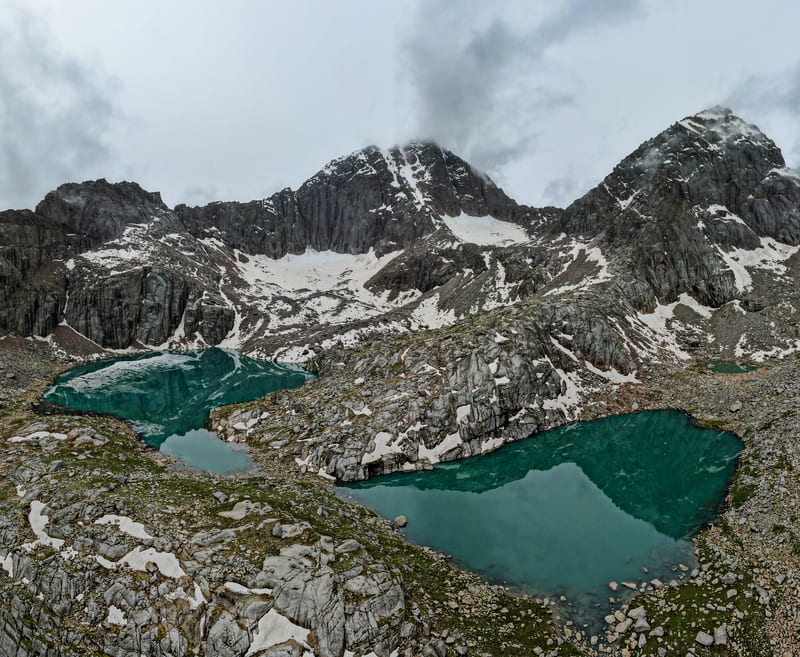
• Boz-Uchuk Lakes — a chain of turquoise alpine lakes surrounded by high mountain ridges
• Bulak-Ashuu Lakes — hidden lakes high in the Jyrgalan mountains
• Ailanysh Lakes — remote alpine lakes in a quiet valley rarely visited by tourists
• Ala-Kul Lake (3550 m) — one of Kyrgyzstan’s most famous glacial lakes
Route Highlights
• Combine horse riding and trekking in one expedition
• Explore the remote Jyrgalan mountains, far from busy trekking routes
• Cross several spectacular high-altitude passes above 3500 m
• Camp beside the turquoise waters of Ala-Kul Lake
• Enjoy panoramic views of Djigit Peak, Karakol Peak and Oguz-Bashi
• Relax in the natural hot springs of Altyn Arashan
• Experience traditional nomadic life with nights in authentic yurt camps
• Trek through the beautiful Telety and Djeti-Oguz valleys
Requirements
• Good physical condition recommended for multi-day trekking
• Ability to walk 5–7 hours per day on mountain terrain
• Proper trekking shoes and warm clothing for high altitude
• Waterproof jacket and basic trekking gear
• Travel insurance covering trekking activities
Karakol – -Jyrgalan - TerimTor
Horse riding
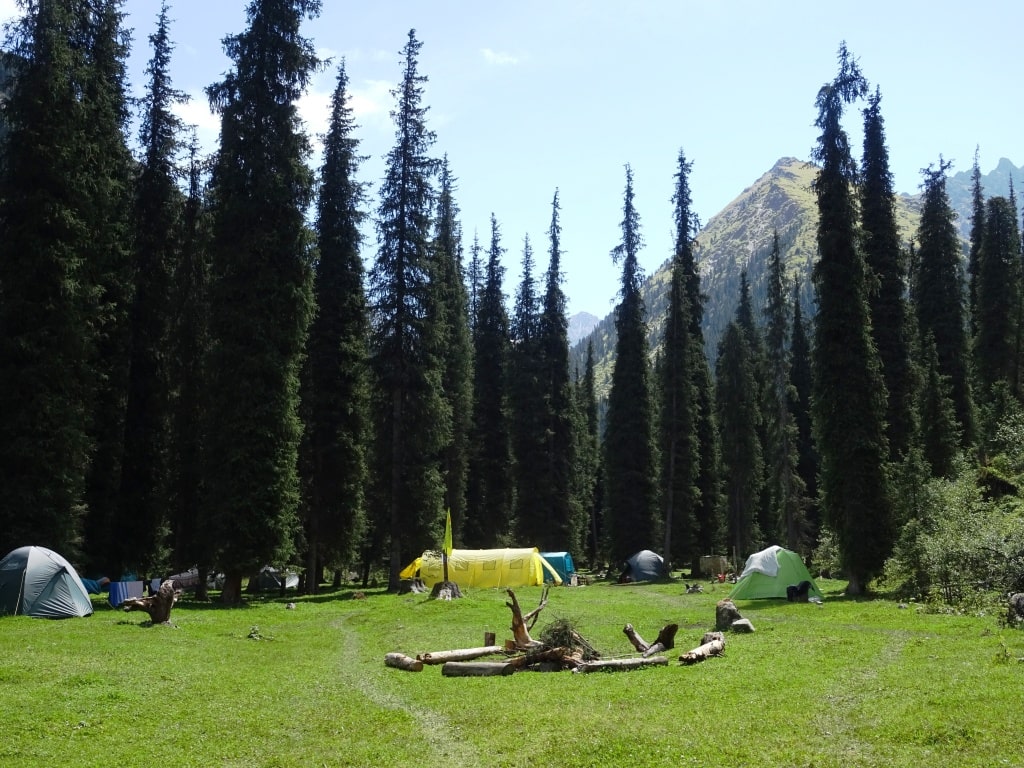
Transfer from Karakol to Jyrgalan ~1 hour (60km). Instruction from horse guide. Starting our 8 days combined tour. The route is not hard. On the way we will pass local sight Tulpar-Tash. The legend says that horse of our national hero Manas stepped to this rock and left foot prints. Lunch after arrival. After we ride to Bulak-Ashuu lakes located deep in the gorge higher on the rocks. Overnight in Yurt camp at 3200m.
Distance: 14 km
Bozuchuk lakes – Almaluu gorge
Horse riding
Breakfast. Today we have two passes. First one is Bulak-Ashuu 3450m. After climb from the valley floor to the 3363m Boz-Uchuk pass. Stop along the way for lunch. Our camp will be located next to the Bozuchuk lakes which is also in the same altitude with a pass. If we've arrived early enough to still have some daylight, the northern tip of the stubby ridge that marks the western boundary of the valley below offers fine sunset views facing back towards the Issyk-Kol basin, though many find it hard to tear themselves away from the Boz-Uchuk Lakes. Overnight in the yurt camp (Elevation: 3450m).
Trekking distance: 15 km
>Bozuchuk lakes – Almaluu gorge
Horse riding
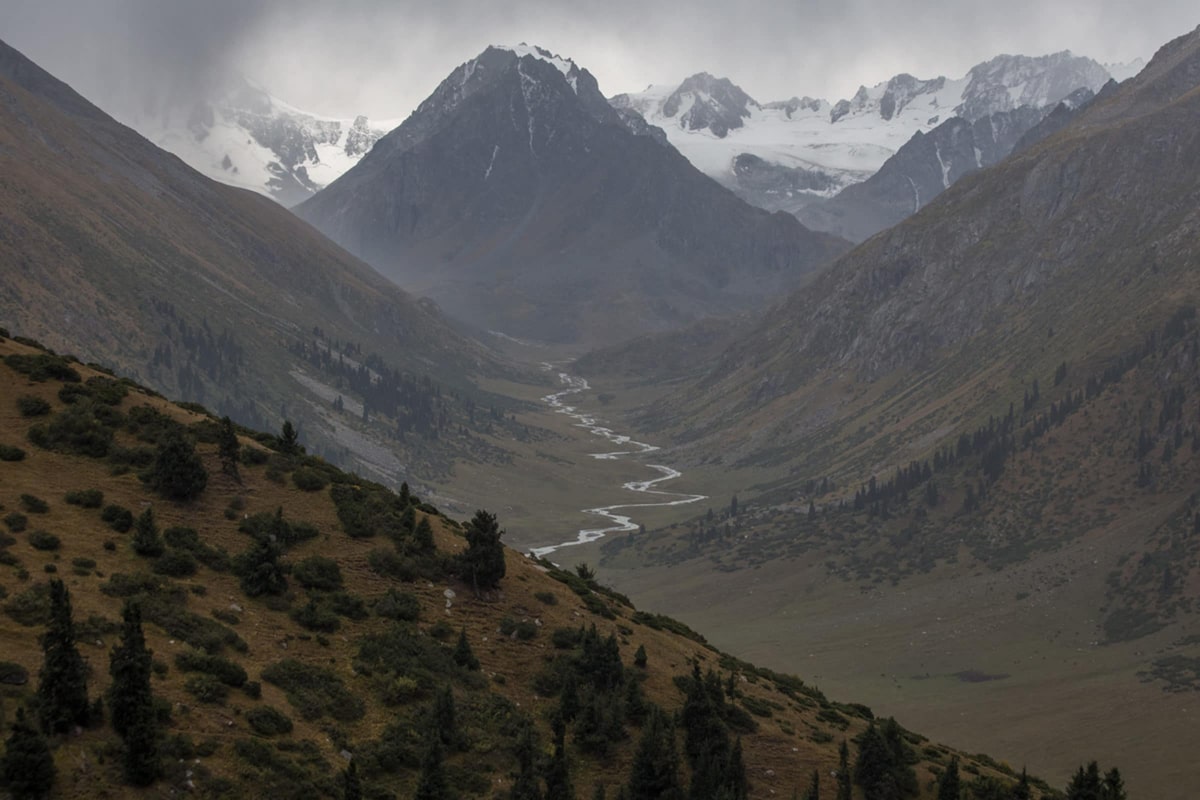
Early breakfast because of the long day. This day's route starts by crossing the small ridge immediately West of camp and descending to the main valley floor below. We will follow the trail uphill as it parallels the river for around 2km before crossing and heading more steeply uphill to the obvious pass in the distance at 3524m. From the top, the Jergez valley spreads out below and an excellent view of Tashtanbek Tor Bashi peak dominates the southern horizon. Descend down to the camp and lunch. From the camp, the trail continues on towards the first Ailanysh Lake (at 3445m), already visible to the SW across the valley, via the Jergez river and up the first stretch of the Ailanysh valley. The climb steepens past the second lake, up to the Ailanysh Pass at 3676m. About 5km into this final descent of the day, as the trail curves to just above the main branch of the Ak-Suu river, we can see unbelievable views down towards an unnamed 3855m peak and the blinding snowy whiteness of the Ak-Suu Wall's glaciated slopes. Overnight in yurts (Elevation: 2750m).
Trekking distance: 19 km
Almaluu – Altyn Arashan gorge
Horse riding
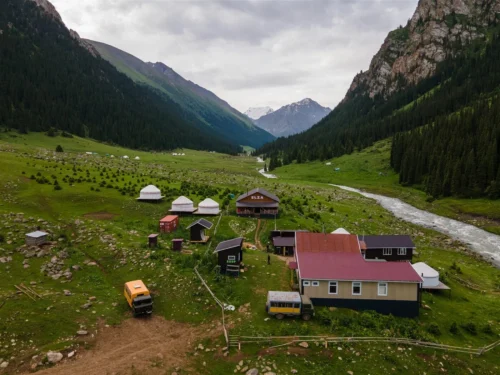
Today's a relatively easy day, distance-wise, but it begins with an 800m+ climb Ortok pass (3650 m). The trail continues along the East side of the river to the main Ak-Suu Arashan valley. After lunch small walking to the wild hot springs and taking a dip in the hot springs that have made the valley locally famous since before the Soviet era. Rest up tonight, because tomorrow is a long but rewarding uphill day. Overnight guesthouse (Elevation: 2500m).
Distance: 14 km
Altyn Arashan – Ala Kul lake
Horse riding
Trekking
Breakfast. Today we go to cross another pass which called Ala-Kul pass. From Altyn Arashan, cross the large bridge over to the West side of the Ak-Suu River and continue South for just over 2km to the first large valley that rises off to the Southwest. From the turn out of the Arashan valley it's around an 8km uphill that rises from 2570m at the valley floor to 3906m at the Ala-Kol North pass. We say good bay to our horses and continue by foot. with the last 200m of elevation feeling nearly-vertical as it rises through loose scree over which two obvious paths have been stomped out by the multitude of hikers that hike up Issyk-Kol's most popular trekking route. The views from the top of the pass are something sublime, though, taking in an incredible panorama of 5000m+ peaks and the breadth of Ala-Kol lake.In this day we will camp next to the Ala-Kul Lake. Overnight in the tent (Elevation: 3550m).
Residence: yurt stay/guesthouse
Included meal: B,L.D
Trekking distance: 15 km
Ala Kul – Karakol gorge
Trekking
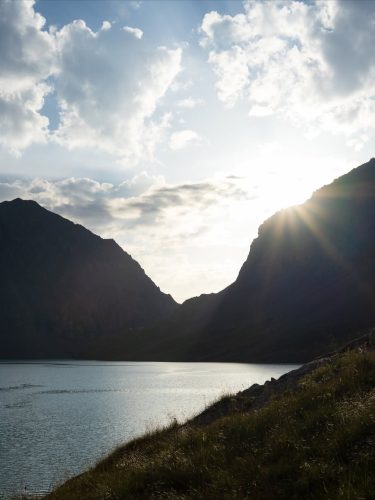
From the camp, we will continue to the west. Most tourists will continue downhill here to the Karakol Valley via the Sirota hut, but loop instead of around the curve of the lake along a small path which is visible from afar that climbs from the lake along a rockfall to the 3781m Panorama Pass. From East to West across the horizon the most obvious summits are Djigit Peak (5178m), Karakol Peak (5216m), and Öguz-Bashi Peak (5126m). Expect around two hours for the full 4km of hiking, more if you're generally slow on downhills. Your knees will probably need a break by the time you've reached the valley, so break for lunch here and rebuild your strength for the next climb. Our camp will be located at 3200m.
Residence: Tent
Included meal: B,L,D
Trekking distance: 15 km
Karakol gorge – Teleti camp
Trekking
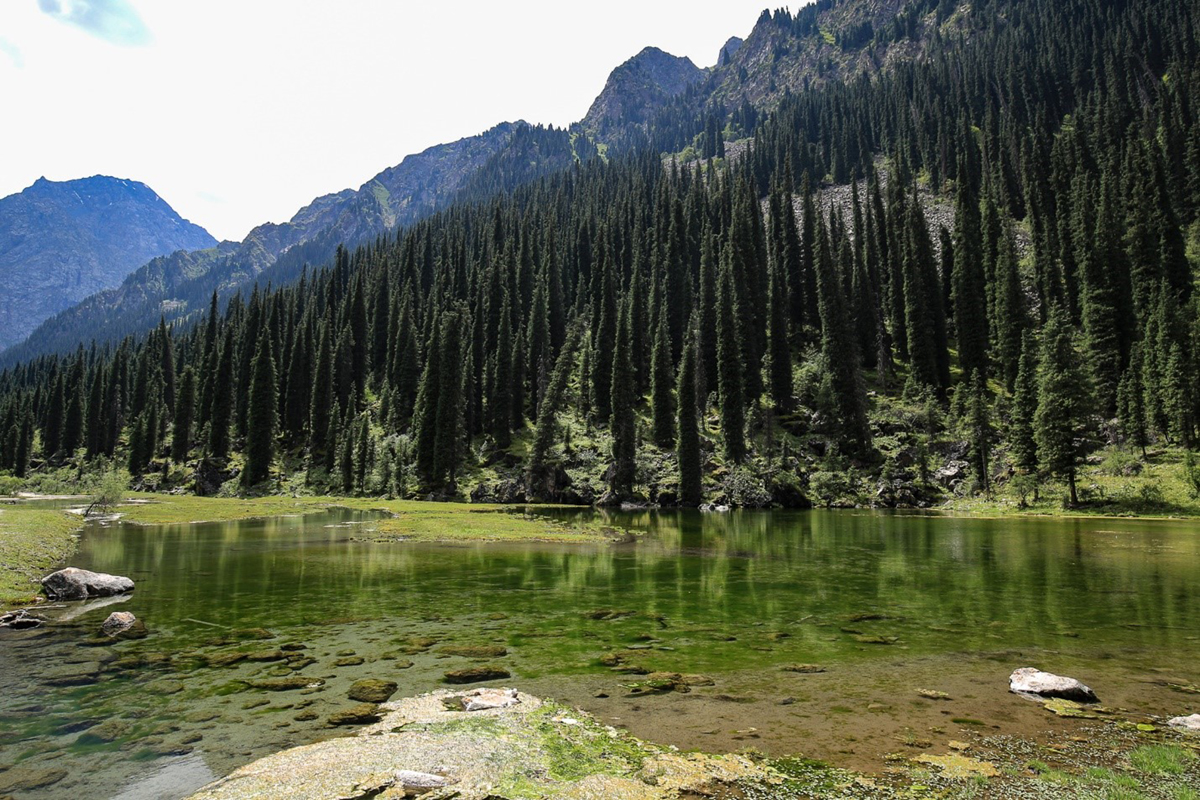
After breakfast head up the valley around 3km to where a path branches up the Telety Valley. The valley is spoiled for choice of campsites, but for views it's hard to beat a long flat area about halfway up the valley where the river broadens briefly, with great panoramas of Telety to the Southwest and back towards Ala-Kol's passes to the Northeast. we will pack up camp and head up the valley on the week-long trek's last uphill section – to the 3792m Telety Pass it's less than two easy hours (though the way does get a little steeper on that last bit), continuing down another hour and a half to the river valley on the far side (around 7km from camp to pass to river). We walk down to the valley and camp not far from the river. Overnight in the tent (Elevation: 3100m).
Residence: Yurt stay
Included meal: B,L,D
Trekking distance: 14 km
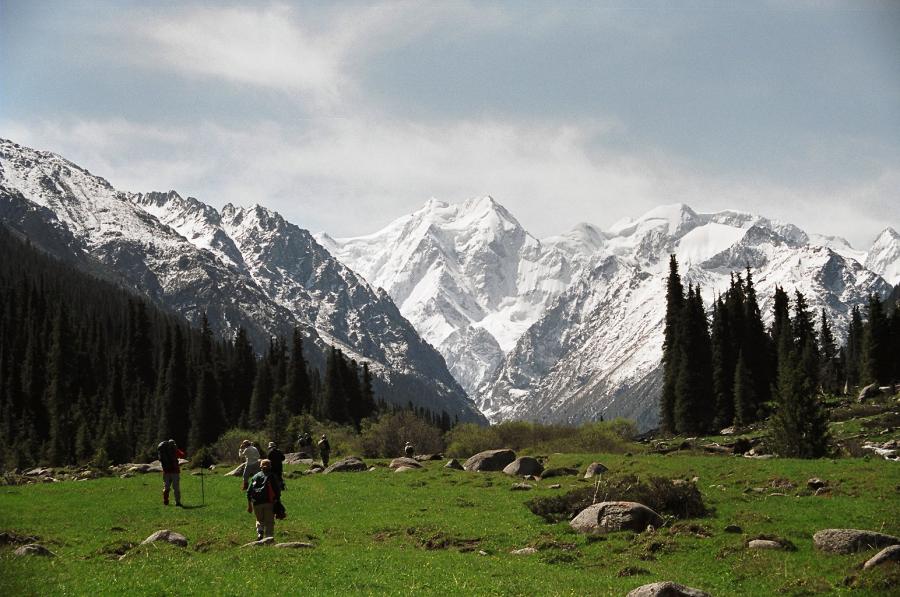
Walking down to Djeti-Oguz valley. We will have lunch in yurts and make small hiking to the waterfall named Girl’s braids. Transport will take us from Kok-Jaik pasture to Karakol town. Overnight in the guest house.
Trekking distance: 14 km
Residence: no
Included meal: B,L
No map available.
| Amount of people | Cost per person (KGS) | Cost per group (KGS) |
| 1 | 174550 | 174550 |
| 2 | 115050 | 230100 |
| 3 | 95217 | 285650 |
| 4 | 85300 | 341200 |
| 5 | 79350 | 396750 |
| 6 | 75383 | 452300 |
| 7 | 81764 | 572350 |
| 8 | 78488 | 627900 |
| 9 | 75939 | 683450 |
| 10 | 77150 | 771500 |
| 11 | 75186 | 827050 |
| 12 | 73550 | 882600 |
Included
- All accommodation
- 3 times meal
- English speaking guide
- All transportation
- Entrance fees
- Hot springs
- Horse riding
- All park enty fees
- Sleeping bag, mattress
- Starlink internet
- Horses
- Extra guide if over 7
Frequently Asked Questions
- How many people stay in one yurt? Depending on camp occupancy, 1–5 people share a yurt. Accommodation is shared.
- Are sleeping bags and mattresses provided, or should I bring my own? Sleeping bags and mattresses are provided. Clean sheets are available upon request.
- Are towels provided? No, please bring your own towels and personal hygiene items.
- Can I charge my phone or other devices? Yes, charging is possible, but electricity may be limited and queues may form. We recommend bringing a power bank.
- Is there heating in the yurts? Yurts are insulated, but there are no stoves inside.
- Is bed linen provided? Yes, you can rent bed linen at our office in Karakol (deposit required).
- Is there a shower and hot water? Hot showers are available only at the Altyn-Arashan camp.
- Where are toilets and washbasins located? They are within walking distance of the yurts at the camps.
- Are there shops nearby? Yes, most camps have small shops for basic necessities.
- Is Wi-Fi or mobile coverage available? Starlink Wi-Fi is available. Guests with a tour package have automatic access. Others can purchase access at our office in Karakol.
- Is it safe to leave personal belongings in the yurt? We recommend keeping valuables with you. The camp administration is not responsible for personal belongings.
- Are there separate yurts for men and women? Yes, standard accommodation is separate. For families or groups traveling together, mixed accommodation is possible on request
- Where can I leave my things during the trek? At our office in Karakol.
- Where can I park my car during the hike? Please consult the manager for parking arrangements.
- Can beginners participate? Yes, guides and horse handlers will assist you.
- Are the horses trained for riding? Yes, calm and accustomed to riders.
- Is protective gear provided? Yes, helmets and basic equipment are provided.
- What safety measures are followed? Before the tour, the handler gives a full safety briefing.
- What is included in the accommodation cost?
- Place in shared yurt
- Sleeping bag
- Mattress
- Does price depend on the season? No, the price is fixed year-round.
- Are there discounts for students or groups? Information available on request via email.
- Can I pay only for accommodation without additional services? Yes, you can select and pay only for the services you need.
- How is payment made? Booking requires a 10% deposit or 100 USD (depending on total tour cost). The balance is paid on arrival at the office.
- What currencies are accepted?
- Kyrgyz som (KGS)
- USD
- EUR Damaged, old, or very small denomination banknotes are not accepted.
- Payment methods:
- Cash
- Card (3% bank fee applies)
- Are there additional fees? Yes, 3% bank commission for card payments.
- When do the yurt camps operate? From June 1 to September 20.
- Which tours are available off-season? Spring, autumn, and winter tours. See "Seasonal Tours" folder.
- What types of guides are available?
- Expert guide: highly experienced, fluent in English, knowledgeable about routes, local culture, and nature.
- Intermediate guide: 1–2 years experience, good English, reliable accompaniment.
- Leader/assistant: knows the route, basic English, responsible mainly for showing the trail.
- What is the maximum weight a porter can carry? Up to 15 kg of personal belongings per tourist.
- Can I check the weather forecast for a specific camp? Yes, check online by the camp’s name.
- How quickly does the weather change in this area? Mountain weather is very variable. Rain, fog, or sunshine may appear and disappear quickly.
- Typical temperatures during the day and night:
- Day: +15…+25 °C (summer, depending on altitude and sun)
- Night: +5…+10 °C, colder at higher elevations Bring warm clothing and a raincoat.
- With a full meal package, the following are included:
- Breakfast
- Lunch box for the trail
- Upon arrival: soup or salad
- Dinner (starter and main course)
- Are vegetarian, vegan, gluten-free, or allergen-free meals available? Yes, alternative meal options are provided. Please inform us in advance about any dietary restrictions or preferences.
- Is drinking water, tea, or coffee available in the camps? Yes, clean drinking water is available at all camps for refilling bottles, and tea and coffee are provided throughout the day.
- What are the meal times?
- Breakfast: 07:00–09:00
- Lunch: lunch box issued before departure
- Dinner: 19:00–21:00
- Is halal or kosher meat served? Yes, all meat served in the camps is halal.
- Can I bring my own food or supplements? Yes, you may bring additional food or supplements if needed.
- What type of cuisine is usually offered? The menu is diverse, including both local and international dishes. Traditional dishes (kurdak, plov, manti, various soups) are served alongside European and Asian cuisine. All meals are prepared by experienced chefs with attention to quality and taste.