
A 5-Day Jeti-Oguz to Altyn-Arashan treking via Ala-Kol lake
A 5-Day Jeti-Oguz to Altyn-Arashan treking via Ala-Kol lake
Is this trip for me?
Starting from $485 per person (Fixed Date Group Tour)
Minimum 3 participants required to confirm departure.
Private departures available — check Dates & Prices.
Overview
This is a 5-day trekking adventure along the Ak-Suu Transverse route—one of Kyrgyzstan’s most scenic and diverse mountain routes. Beginning at the famous red sandstone cliffs of Jeti-Ögüz and ending in the natural hot springs of Altyn Arashan, the journey leads through alpine valleys, spruce forests, wide glaciated gorges, and high mountain passes.
You’ll cross three major passes, camp beside the iconic Ala-Kul Lake, and experience authentic Kyrgyz hospitality in yurts, tents, and a cozy guesthouse. The trek concludes with a descent to Ak-Suu village and a short transfer back to Karakol.
Highlights
Mountain Passes — 2 high-altitude passes
- Teleti Pass — 3,792 m (Moderate)
- Ala-Kul North Pass — 3,906 m (Challenging)
Alpine Lakes — 1 iconic lake + multiple small tarns
- Ala-Kul Lake — 3,550 m, one of Central Asia’s most photographed alpine lakes
- Several small glacial tarns and streams along the rout
Route Features
- The legendary Jeti-Ögüz red cliffs & Broken Heart Rock
- Scenic Telety & Karakol gorges with forests, meadows, and rivers
- Wide glaciated valleys of the Terskey Ala-Too range
- Camp beside turquoise Ala-Kul
- Relaxing natural hot springs at Altyn Arashan
- Authentic overnights in tents, yurts, and a mountain guesthouse
- Stunning views of Oguz Bashi Peak
Requirements
- Good physical condition for multi-day high-altitude trekking
- Proper hiking boots, warm layers, waterproof clothing
- Ability to walk 5–8 hours per day on varied mountain terrain
- Travel insurance covering trekking activities
Highlights
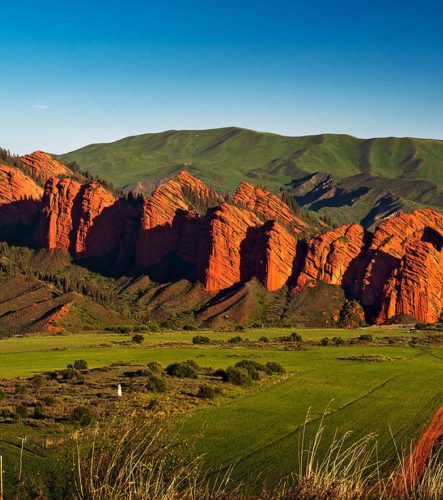
Karakol → Jeti-Ögüz → Telety Valley
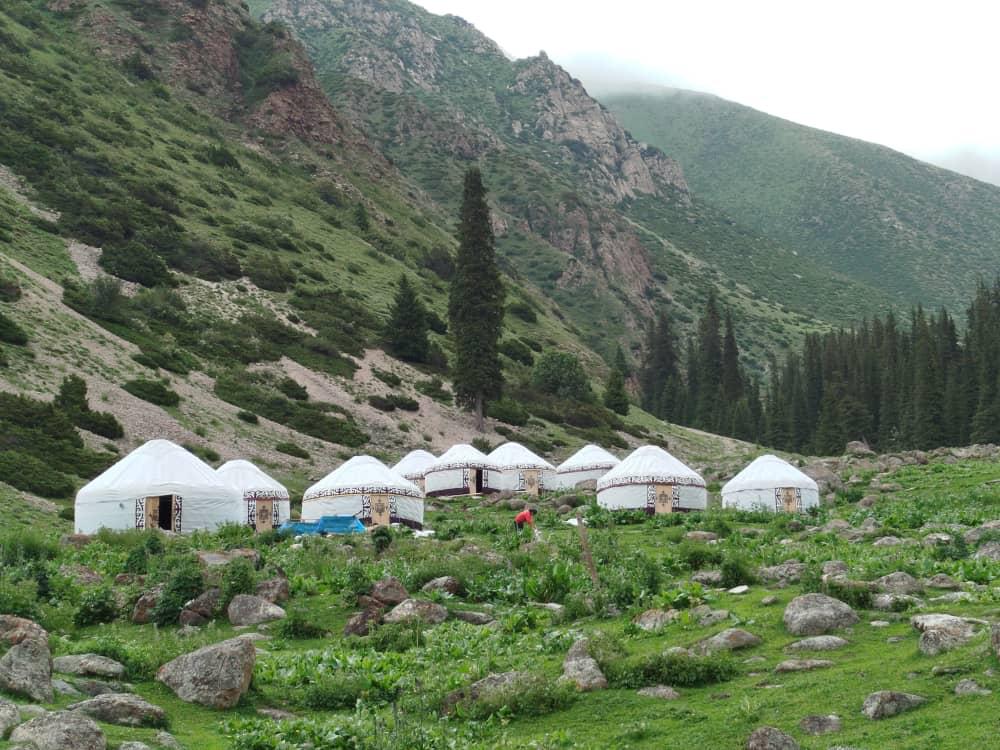
Drive from Karakol to the famous red cliffs of Jeti-Ögüz. Begin trekking through Kok-Jaik pasture into Telety Valley. Lunch in a traditional yurt before continuing along the river to the tent camp.
Distance: 13 km
Hiking time: 4–5 h
Accommodation: Yurt camp
Meals: L / D
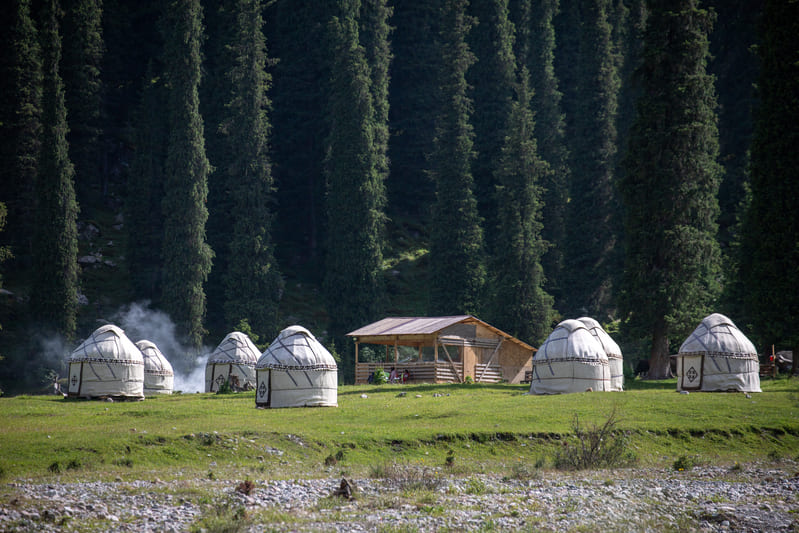
Day 2 — Telety → Teleti Pass → Karakol Gorge
Ascend to Teleti Pass (3,792 m) for panoramic alpine views. Descend through meadows and spruce forests into Karakol Gorge. Overnight in a yurt camp.
Distance: 15 km
Hiking time: 6–7 h
Accommodation: Yurt camp
Meals: B / L / D
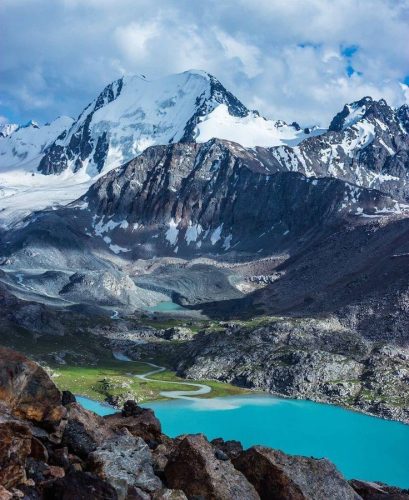
Day 3 — Karakol Gorge → Ala-Kul Lake
Trek deeper into Karakol Gorge, gradually gaining altitude. The final push leads to the turquoise Ala-Kul Lake (3,550 m). Set up camp beside the shoreline.
Distance: 11 km
Hiking time: 4–5 h
Accommodation: Tent camp
Meals: B / L / D
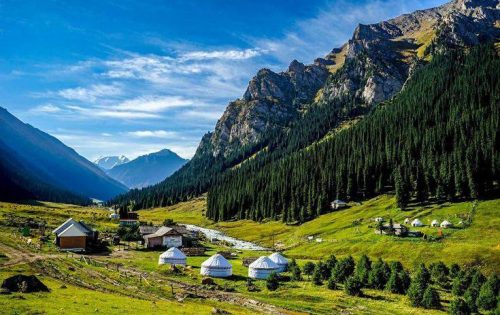
Ala-Kul → Ala-Kul North Pass → Altyn Arashan
Climb to Ala-Kul North Pass (3,906 m), the highest point of the trek, offering dramatic views of the Terskey Ala-Too range and Ala-Kul Lake. Descend into the Altyn Arashan Valley and enjoy its natural hot springs.
Distance: 15 km
Hiking time: 7–8 h
Accommodation: Yurt camp
Meals: B / L / D
Altyn Arashan → Ak-Suu → Transfer to Karakol
Descend through forests and river valleys to Ak-Suu village (14 km / 4–5 h). Short transfer back to Karakol (~30 minutes). End of the trek.
Distance: 14 km
Hiking time: 4–5 h
Accommodation: Not included
Meals: B / L
Transfer: 30 min
| Amount of people | Per person USD | Group USD |
| 1 | $964 | $964 |
| 2 | $651 | $1,302 |
| 3 | $547 | $1,641 |
| 4 | $495 | $1,979 |
| 5 | $463 | $2,317 |
| 6 | $443 | $2,655 |
| 7 | $486 | $3,404 |
| 8 | $468 | $3,743 |
| 9 | $453 | $4,081 |
| 10 | $442 | $4,419 |
| 11 | $432 | $4,757 |
| 12 | $425 | $5,095 |
| 13 | $418 | $5,434 |
| 14 | $412 | $5,772 |
| 15 | $407 | $6,110 |
| 16 | $403 | $6,448 |
| 17 | $399 | $6,786 |
| 18 | $396 | $7,125 |
| 19 | $393 | $7,463 |
| 20 | $390 | $7,801 |
Included
- All accommodation
- 3 times meal
- English speaking guide
- All transportation
- Entrance fees
- All park enty fees
- Starlink internet
- Extra guide if over 7
Not Included
- Hot springs
- Insurance
- Porters for luggage
- Single supplement
Frequently Asked Questions
- How many people stay in one yurt? Depending on camp occupancy, 1–5 people share a yurt. Accommodation is shared.
- Are sleeping bags and mattresses provided, or should I bring my own? Sleeping bags and mattresses are provided. Clean sheets are available upon request.
- Are towels provided? No, please bring your own towels and personal hygiene items.
- Can I charge my phone or other devices? Yes, charging is possible, but electricity may be limited and queues may form. We recommend bringing a power bank.
- Is there heating in the yurts? Yurts are insulated, but there are no stoves inside.
- Is bed linen provided? Yes, you can rent bed linen at our office in Karakol (deposit required).
- Is there a shower and hot water? Hot showers are available only at the Altyn-Arashan camp.
- Where are toilets and washbasins located? They are within walking distance of the yurts at the camps.
- Are there shops nearby? Yes, most camps have small shops for basic necessities.
- Is Wi-Fi or mobile coverage available? Starlink Wi-Fi is available. Guests with a tour package have automatic access. Others can purchase access at our office in Karakol.
- Is it safe to leave personal belongings in the yurt? We recommend keeping valuables with you. The camp administration is not responsible for personal belongings.
- Are there separate yurts for men and women? Yes, standard accommodation is separate. For families or groups traveling together, mixed accommodation is possible on request
- Where can I leave my things during the trek? At our office in Karakol.
- Where can I park my car during the hike? Please consult the manager for parking arrangements.
- Are trails marked? Yes, main routes are marked for easy navigation.
- Where can I get GPS coordinates of camps and key route points? In the "Navigation and GPS" folder, there is a QR code linking to a map with all camps and main route points.
- Which apps or maps are recommended for navigation? Any navigation app can be used. We recommend Maps.me, as it works offline and is well-suited for mountain trails.
- Are there dangerous sections on the routes? Routes are generally safe if safety rules are followed. Natural obstacles such as rocky areas or small river crossings may occur. Please proceed with caution and choose routes appropriate to your fitness level.
- How to navigate in bad weather or low visibility? Check the weather forecast and plan your route accordingly. In fog, rain, or snow, it is better to postpone the hike or wait for improved conditions.
- 3–4 day tours: moderate difficulty
- Longer or high-altitude routes: higher fitness level required
- What is included in the accommodation cost?
- Place in shared yurt
- Sleeping bag
- Mattress
- Does price depend on the season? No, the price is fixed year-round.
- Are there discounts for students or groups? Information available on request via email.
- Can I pay only for accommodation without additional services? Yes, you can select and pay only for the services you need.
- How is payment made? Booking requires a 10% deposit or 100 USD (depending on total tour cost). The balance is paid on arrival at the office.
- What currencies are accepted?
- Kyrgyz som (KGS)
- USD
- EUR Damaged, old, or very small denomination banknotes are not accepted.
- Payment methods:
- Cash
- Card (3% bank fee applies)
- Are there additional fees? Yes, 3% bank commission for card payments.
- When do the yurt camps operate? From June 1 to September 20.
- Which tours are available off-season? Spring, autumn, and winter tours. See "Seasonal Tours" folder.
- What types of guides are available?
- Expert guide: highly experienced, fluent in English, knowledgeable about routes, local culture, and nature.
- Intermediate guide: 1–2 years experience, good English, reliable accompaniment.
- Leader/assistant: knows the route, basic English, responsible mainly for showing the trail.
- What is the maximum weight a porter can carry? Up to 15 kg of personal belongings per tourist.
- Is clean drinking water available in the camps? Yes, you can refill your bottles at all camps.
- Can I drink water from rivers, lakes, or other natural sources? Not recommended without purification. Use a water filter or purification tablets.
- Can bottled water be purchased in camps? Yes, most camps have small shops where bottled water is sold.
- Are there restrictions on water use in camps? In some camps, restrictions may apply, especially in remote areas. Please follow the staff’s instructions.
- Can I check the weather forecast for a specific camp? Yes, check online by the camp’s name.
- How quickly does the weather change in this area? Mountain weather is very variable. Rain, fog, or sunshine may appear and disappear quickly.
- Typical temperatures during the day and night:
- Day: +15…+25 °C (summer, depending on altitude and sun)
- Night: +5…+10 °C, colder at higher elevations Bring warm clothing and a raincoat.
- With a full meal package, the following are included:
- Breakfast
- Lunch box for the trail
- Upon arrival: soup or salad
- Dinner (starter and main course)
- Are vegetarian, vegan, gluten-free, or allergen-free meals available? Yes, alternative meal options are provided. Please inform us in advance about any dietary restrictions or preferences.
- Is drinking water, tea, or coffee available in the camps? Yes, clean drinking water is available at all camps for refilling bottles, and tea and coffee are provided throughout the day.
- What are the meal times?
- Breakfast: 07:00–09:00
- Lunch: lunch box issued before departure
- Dinner: 19:00–21:00
- Is halal or kosher meat served? Yes, all meat served in the camps is halal.
- Can I bring my own food or supplements? Yes, you may bring additional food or supplements if needed.
- What type of cuisine is usually offered? The menu is diverse, including both local and international dishes. Traditional dishes (kurdak, plov, manti, various soups) are served alongside European and Asian cuisine. All meals are prepared by experienced chefs with attention to quality and taste.